Open the door in simulation. Then open it.
A scalable door-opening environment and a baseline agent: domain-randomised handles, arms and rooms, trained by reinforcement learning in simulation and transferred to a real robot.
1. The question
Doors are the main barrier for a home robot: handles, hinges, weights and lighting all vary. Can a policy learned entirely in simulation open a door it has never seen?
2. Method
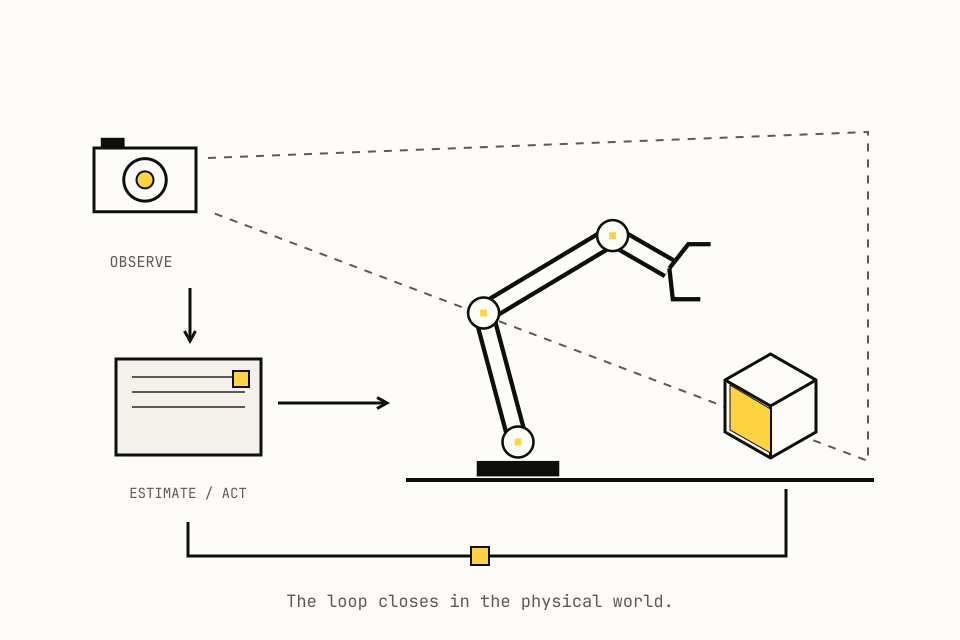
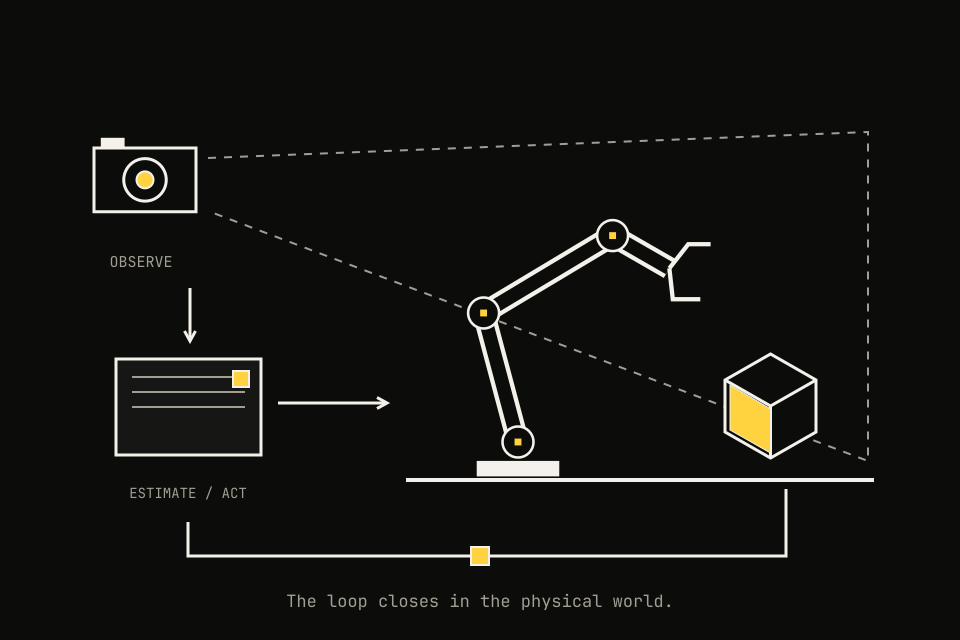
A simulated environment with massive domain randomisation over handle types, door physics, textures and camera placement; a baseline agent trained by reinforcement learning; transfer to hardware without fine-tuning on the real door.
- Randomise what you cannot measure; the policy learns to ignore it.
- A baseline that others can beat is worth more than a result nobody can reproduce.
- The environment is the deliverable: it outlives any single policy.
3. What we can report
The environment and baseline are public (DoorGym, with the University of California, Berkeley). Task, setup, metric, baseline and date are in the paper.
4. Transfer
The same discipline now runs the physical-AI work with a partner lab in Rome: simulate, randomise, measure, then touch the hardware.
One line about the problem is enough. We reply within a day.
letsbuild@aiolilabs.com